
Materials Conservation
By far the biggest emitter of carbon emissions during bulk earthworks is the transport and disposal of materials off-site and importing of new materials to replace them. The more material we can retain and re-use on-site the less the carbon footprint will be.
Novel Ways of Re-using Site-won Excavated Wastes
We have an Environment Agency licence to establish mobile treatment facilities can devise novel ways of re-using site-won excavated wastes to deliver overall project objectives.
Concrete, hardcore and other solid inert wastes can be crushed and screened on-site to generate various grades of recycled aggregates that can be re-used during the development phases of projects. Asphalt wastes generated from planning road, car park and pavement surfaces can be used as feedstock for new asphalt material.
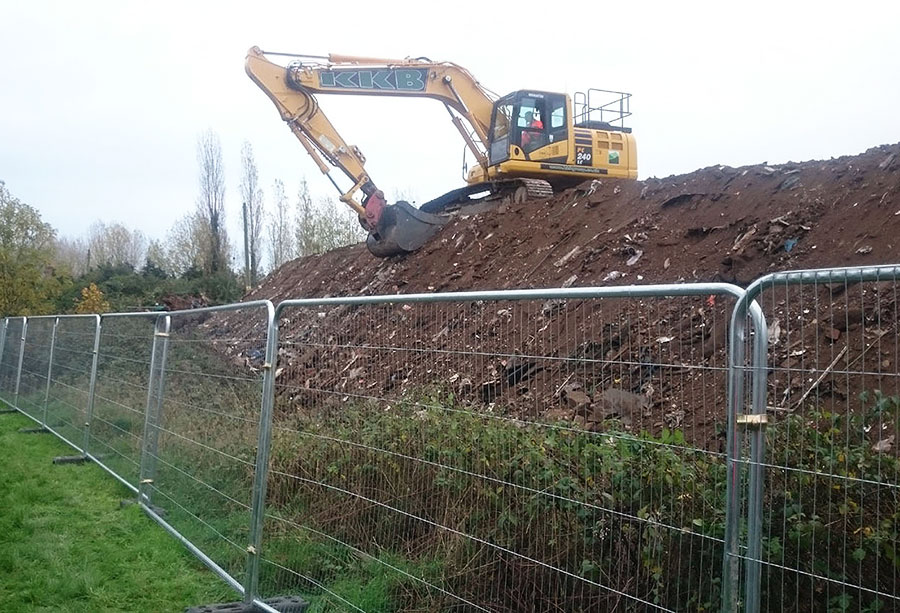
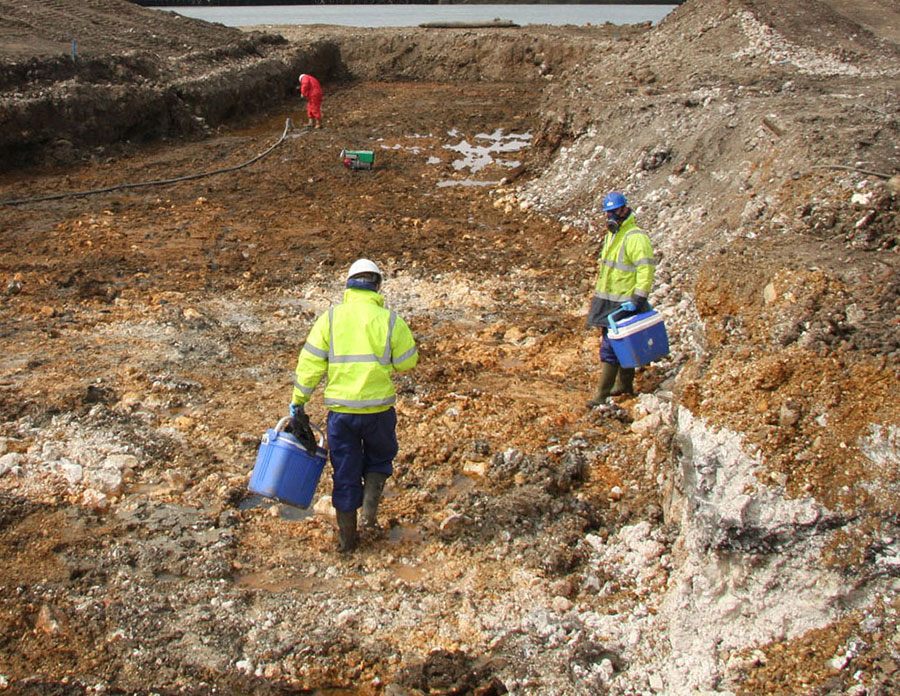
There may be a number of end-uses for excavated wastes (earth) to deliver the overall project objectives. It will need to be tested chemically (for contaminants) and geo-technically (for moisture content and particle size) to check if it is suitable. Site-won earth can be re-used on site for general fill purposes, to create noise bunds, visual screening or other landscaping features.
In-situ Remediation
We also specialise in the in-situ remediation of contaminated land. Processing and reusing the land on-site can reduce or even eliminate the need for virgin sources and drastically reduce te cost and CO2 emission involved in transporting new materials to-site.